📘 Read the Story
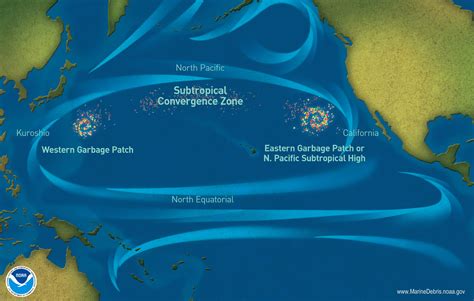
The Great Pacific Garbage Patch is a massive area of floating plastic trash in the Pacific Ocean between Hawaii and California. It is more than twice the size of Texas. Ocean currents carry plastic into this area, where it slowly spins around in the water.
As the plastic pieces move and hit each other, they break apart into tiny particles called microplastics and nanoplastics. Microplastics are usually as small as a pencil eraser or smaller. Nanoplastics are even tinier — many times smaller than a human hair.
Scientists from China and the United States studied these particles and found that they may contribute to global warming. The tiny plastics can rise into the air and absorb sunlight, which warms the atmosphere.
Researchers studied the color, size, and chemistry of the plastics. They discovered that colored plastics, especially red, yellow, blue, and black plastics, absorb much more sunlight than clear plastics. Dark plastics act like black clothing on a hot day because they soak up heat.
The scientists also discovered that smaller particles absorb more sunlight and stay in the atmosphere longer. Nanoplastics may be tiny, but they can have a powerful effect on warming.
As plastics age, they often become darker and absorb even more heat. Scientists tested this in laboratories using ultraviolet light.
The warming effect from plastics is smaller than major pollutants like black carbon, but researchers say it is still important. In some parts of the ocean with large amounts of plastic pollution, the warming effect may even become stronger than black carbon.
The study shows that plastic pollution is not only dangerous for oceans and wildlife. It may also contribute to global climate change.
🔥 What is black carbon?
Black carbon, also known as soot, is a type of particulate matter, which is also called dust, produced when fossil fuels, biofuels, and biomass do not burn completely.
Black carbon contributes significantly to global warming because it absorbs sunlight and heats the atmosphere.
It can also speed up the melting of snow and ice when it lands on these surfaces.
🧠 Vocabulary — Matching A Matched: 0/4
Click a word. Then click the matching definition.
Words
Definitions
🧠 Vocabulary — Matching B Matched: 0/4
Click a word. Then click the matching definition.
Words
Definitions
📖 Vocabulary in Context
❓ Comprehension — Multiple Choice
✍️ Cloze Activity 10 Blanks
✔️ True or False
💬 Discussion & Writing
- Why is plastic pollution dangerous?
- Should companies reduce plastic packaging?
- What can people do to reduce plastic waste?
- Do you think governments should ban some plastics?
- How can schools help teach students about pollution?
🎭 Dialogue — Plastic Pollution and Climate Change
Jamile: Did you know there is a giant area of trash in the Pacific Ocean?
Eric: Yes, I heard it is called the Great Pacific Garbage Patch.
Jamile: I was surprised that plastic pollution may also affect climate change.
Eric: Me too. I thought it only harmed fish and sea animals.
Jamile: Scientists say tiny plastic particles can rise into the air.
Eric: And dark plastics absorb sunlight and heat the atmosphere.
Jamile: Nanoplastics seem especially dangerous because they stay in the air longer.
Eric: And they are saturating the planet with plastic, the air, waterways and soil.
Jamile: Yes, they're even in our brains, lungs and blood.
Eric: We should all try to reduce our plastic usage for our own good and for Planet Earth!
📰 Read the Original Article
This lesson was adapted from a CNN/Yahoo News article about the Great Pacific Garbage Patch and climate change.
📝 Answer Key
Vocabulary B: 5 massive, 6 climate, 7 particles, 8 ultraviolet
Vocabulary in Context: 1 absorb, 2 massive, 3 currents
MCQ: 1-B, 2-B, 3-B, 4-C, 5-C
True/False: false, true, false, true