Read the Story — L3 Summary
Poisoned Ground: The Tragedy at Love Canal and Related Cases
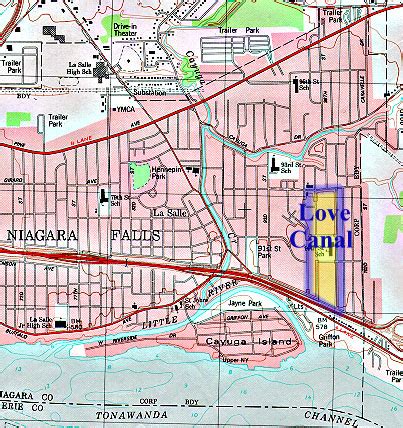
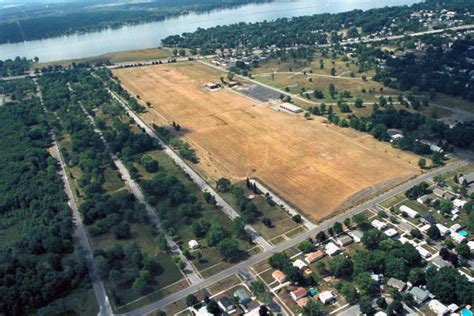
In the late 1970s, the United States was forced to confront the hidden dangers of decades of industrial waste dumping. The American Experience documentary “Poisoned Ground: The Tragedy at Love Canal” recounts one of the most infamous environmental disasters in U.S. history—when a working-class neighborhood in Niagara Falls, New York, was unknowingly built atop 21,000 tons of buried chemical waste.
The origins of the disaster trace back to the 1940s and 1950s, when the Hooker Chemical Company used an unfinished canal as a dumping ground for highly toxic substances such as benzene, dioxin, and pesticides. In 1953, Hooker covered the canal, sold the land to the Niagara Falls School Board for one dollar, and included a written warning not to disturb the buried chemicals. That warning was ignored. A public elementary school and hundreds of homes were later built on and around the site.
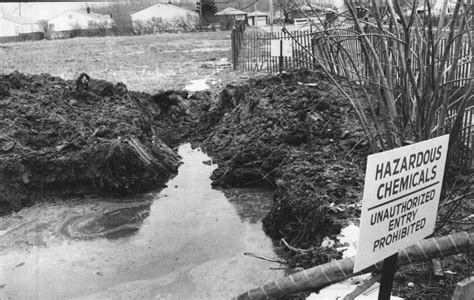
For years, the waste remained buried, but in the mid-1970s, rising groundwater and heavy rainfall caused the toxic mixture to surface. Residents noticed strong odors, oily black sludge in basements, and contamination in their yards. Alarming health problems began to spread—birth defects, miscarriages, epilepsy, asthma, and cancers—especially among families closest to the canal.
One mother, Lois Gibbs, discovered that her son’s illness might be linked to the contaminated school. Her attempt to move him soon grew into a full-scale movement. Gibbs and her neighbors formed the Love Canal Homeowners Association (LCHA), teaching themselves science, politics, and strategy. Despite government resistance, they organized protests and even briefly held two Environmental Protection Agency officials hostage to demand national attention. Their relentless activism exposed major gaps in environmental laws and forced the issue into the public eye.
President Jimmy Carter declared two federal health emergencies. The first, in 1978, relocated 239 families living nearest the canal; a second, in 1980, extended relocation to the entire neighborhood. The community was eventually dismantled, its homes abandoned and fenced off. The tragedy of Love Canal became a symbol of both corporate negligence and citizen courage.
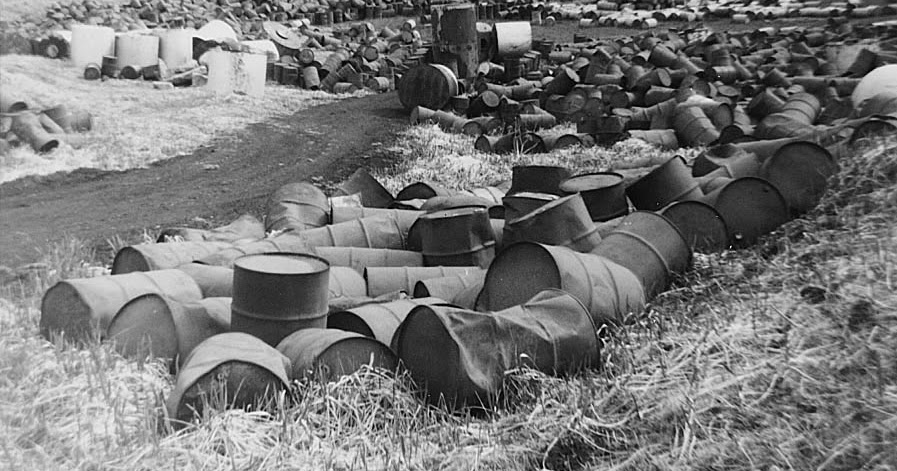
At the same time, a related crisis unfolded in Lowell, Massachusetts, at the Silresim Chemical Company site. When Silresim went bankrupt in 1977, it left roughly one million gallons of industrial chemicals stored in leaking drums and tanks. A fire worsened the danger, and families along Billerica Street were forced to move. Whereas Love Canal showed how buried waste could leak slowly and harm people over time, Silresim revealed the immediate risk of abandoned chemicals in plain sight. Massachusetts responded by creating its own strict cleanup law, Chapter 21E, to handle hazardous waste sites.
Together, Love Canal and Silresim reshaped environmental policy in the United States. Their legacy was the creation of the Comprehensive Environmental Response, Compensation, and Liability Act (CERCLA)—known as Superfund—in 1980. This landmark federal law required polluters, not taxpayers, to pay for toxic cleanups, even when the pollution occurred decades earlier. Both cases taught that chemicals do not disappear when buried or ignored. Safe design, honest cleanup, and prevention are essential to protect public health.
The story of Love Canal remains a landmark in environmental justice: a tale of ordinary citizens, led by Lois Gibbs, who refused to stay silent in the face of poisoning, and whose fight transformed how America handles toxic waste forever.
Pronunciation — Six Columns (Click 🔊 to Hear)
Vocabulary — Matching A
Vocabulary — Matching B
Dialogue — 14 Lines
Teacher: Have you heard about Love Canal?
Student: A little. It was a neighborhood with chemical waste, right?
Teacher: Yes. Old factory waste leaked into homes and schools in the 1970s.
Student: How did people find out?
Teacher: Families saw strange liquids and smelled chemicals. Many got sick.
Student: What did they do?
Teacher: Parents organized and pushed the government to act.
Student: Did the government move the families?
Teacher: First some, and later more, after more tests showed danger.
Student: And what about Lowell?
Teacher: A company called Silresim left about a million gallons of chemicals.
Student: That sounds very unsafe.
Teacher: It was. A fire made it worse, and the state helped families nearby.
Student: Is this why new laws like Superfund were created?
Cloze — Word Bank (crosses out after use) + 🔎 First-Letter Hints
In the late , people learned that old had dumped . At , buried chemicals began to into and . Parents became and asked the to help. In Lowell, the site left about one gallons of chemicals after . A made the danger worse. These crises led to , a law that uses to make companies pay for . Massachusetts also created strong to protect and guide .