Shirin Neshat: Art, Identity, and the Power of the Gaze
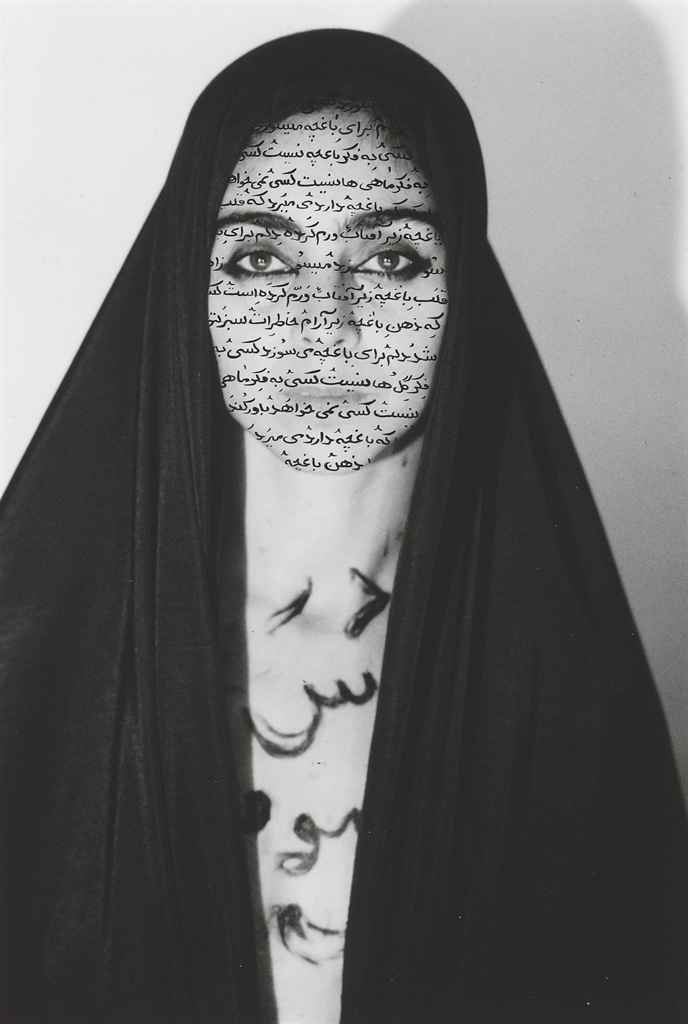
Shirin Neshat (b. 1957) is one of the most significant visual artists of the 21st century. Born in Qazvin, Iran, she moved to the United States to study art just before the 1979 Islamic Revolution. This separation from her homeland created a sense of "exile" that has defined her entire career, leading her to create works that explore the complex relationships between femininity, religion, and politics.
The Woman of Allah: Photography as Dialogue
After nearly a decade of artistic silence, Neshat returned to Iran for a visit in 1990. The changes she saw inspired her breakout series, Women of Allah (1993–1997). These stark, black-and-white photographs featured intricate Farsi calligraphy written directly onto the exposed skin—hands, feet, and faces. The text was often poetry, challenging Western stereotypes about the "silence" of women in the Middle East.
From Stills to Motion: Cinema and Video
In the late 1990s, Neshat transitioned into video installations. Her work Turbulent (1998) won the First International Prize at the Venice Biennale. It featured two screens: one showing a man singing to an appreciative audience, and the other showing a woman singing to an empty hall, highlighting gender restrictions in public performance. She later moved into feature films, winning the Silver Lion for Best Director at the Venice Film Festival for Women Without Men (2009).
Global Recognition and Recent Work
Neshat's work is celebrated globally because it refuses to provide easy answers. In 2024, she was honored with the ICP Lifetime Achievement Award for her contribution to photography. Her recent project, Land of Dreams (2019), shifts her focus to the United States, capturing portraits of Americans in New Mexico to explore the concept of the "American Dream" through her unique Iranian lens.
Complete the Sentences
1. Shirin Neshat was born in the Iranian city of .
2. Her famous photography series, featuring calligraphy on skin, is called .
3. In her photographs, Neshat often uses calligraphy.
4. She won the Best Director award at the Venice Film Festival for the film .
5. Neshat currently lives and works in .
6. In 1998, Neshat won a major prize at the Venice Biennale for her video installation titled .
7. Neshat was awarded a Lifetime Achievement Award in 2024 by the .
8. Her 2019 project, Land of Dreams, was filmed in the state of .