📖 Read the Story Reading
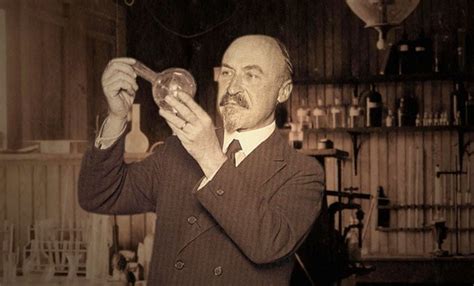
Leo Baekeland was a truly brilliant scientist, known as a chemist, who was born in the small country of Belgium in the year 1863. He showed great promise early in life, even receiving a scholarship to attend the University of Ghent. After finishing his studies, he decided to move to the United States, which is where he made his world-changing invention: the material we now call plastic.
Before he became famous for Bakelite, Baekeland had already proven his inventive skills. He created a special kind of photographic paper that he named Velox. At the time, taking good indoor photographs was difficult because people had to rely heavily on natural light. Velox changed this because it allowed photographers to use artificial electric light sources easily. This was a huge commercial success. He sold this valuable invention to George Eastman, the founder of the Kodak company, for a massive sum of money. This financial success was key because it allowed Baekeland to stop worrying about money and dedicate himself entirely to science. He built his own private, state-of-the-art laboratory at his home in Yonkers, New York, where he could pursue any experiment he wished.
Baekeland’s next major challenge was to create a new material to replace shellac. Shellac is a natural resin that comes from insects and was essential in industry for covering electrical wires—a process called insulation. It kept the dangerous electricity safely contained. However, shellac was expensive, and its supply was unreliable since it came from nature. Baekeland wanted to find a better, cheaper, and more dependable substitute.
He began experimenting with two common chemicals: phenol and formaldehyde. These chemicals react together, and other chemists had tried to combine them before, but they usually ended up with a sticky mess or a foamy, unusable solid. Baekeland realized that the trick was not just what you mixed, but how you mixed it. He used a special closed container where he applied intense heat and pressure to the reacting chemicals. This controlled process prevented the mixture from becoming a foam. He called this innovative device the Bakelizer.
The experiment succeeded in 1907. Baekeland had created a completely new, synthetic material. It was hard, strong, and unlike any previous substance, when it was exposed to heat, it did not melt or soften; instead, it held its shape—a property known as thermosetting. He named his revolutionary invention Bakelite.
Bakelite earned the title of the world's first totally synthetic plastic. This means it was not a natural material that was simply processed; it was created from basic chemicals, entirely synthesized by human hands. It quickly became known as the "material of 1000 uses" because it was durable, relatively cheap, and could be molded quickly into any shape. Because it did not conduct electricity, it was perfect for the rapidly growing electronics industry. It was used to make the casings for early radios and telephones, parts inside cars, electrical plugs, and switches. Its ability to resist heat also made it ideal for everyday items like handles on cooking pots and pans.
Leo Baekeland’s success with Bakelite was enormous. His invention launched the entire modern plastics industry, profoundly impacting manufacturing and daily life around the globe.
🧠 Vocabulary — Matching A 0/8 Choose the best definition
🧠 Vocabulary — Matching B 0/8 Choose the best definition
📝 Vocabulary in Context 0/8 Choose the best word
❓ Comprehension — Multiple Choice 0/10 Choose the best answer
🧩 Cloze — Fill in the Blanks A 0/13 Tap a chip, then tap a blank
1. Leo Baekeland was a brilliant born in .
2. He received a and later moved to the .
3. Before Bakelite, he invented , which worked well with light.
4. He sold Velox to and built a private .
5. His next goal was to replace , a natural that comes from .
6. It was used for to keep dangerous safely contained.
🧩 Cloze — Fill in the Blanks B 0/13 Second half
1. Baekeland experimented with and .
2. He used strong and inside the .
3. In , he successfully created .
4. It was the first totally plastic and it had a quality.
5. Bakelite was , could be quickly , and did not electricity.
6. His invention launched the modern plastics .
✅ True / False 0/10 Type true or false
💬 Role Play — Dialogue 1 Speaking Talking to Leo Baekeland
🌍 Role Play — Dialogue 2 Speaking The impact of plastic today
✍️ Discussion / Writing Writing Short answers or class discussion
📚 Further Vocabulary Activities Practice
Try these before checking your answers:
📘 Answer Key Teacher Use
Vocabulary — Matching A
1. artificial 2. sticky material 3. protection around electricity 4. not dependable 5. a scientific test 6. very strong 7. strong and long-lasting 8. deeply
Vocabulary — Matching B
1. money for study 2. something new that is created 3. replacement 4. substances used in science 5. force 6. does not melt again with heat 7. carry electricity 8. outer covers
Vocabulary in Context
1. scholarship 2. insulation 3. synthetic 4. pressure 5. process 6. conduct 7. casings 8. profound
Multiple Choice
1. Belgium 2. Velox 3. It allowed indoor photography with artificial light. 4. It was expensive and unreliable. 5. Phenol and formaldehyde 6. A special closed container 7. 1907 8. It keeps its shape when heated. 9. It did not conduct electricity. 10. It launched the modern plastics industry.
Cloze A
chemist, Belgium, scholarship, United States, Velox, artificial, Kodak, laboratory, shellac, resin, insects, insulation, electricity
Cloze B
phenol, formaldehyde, heat, pressure, Bakelizer, 1907, Bakelite, synthetic, thermosetting, durable, molded, conduct, industry
True / False
1. true 2. false 3. true 4. false 5. true 6. false 7. true 8. false 9. true 10. false