Hedy Lamarr: The Star of Screen and Science (1914–2000)
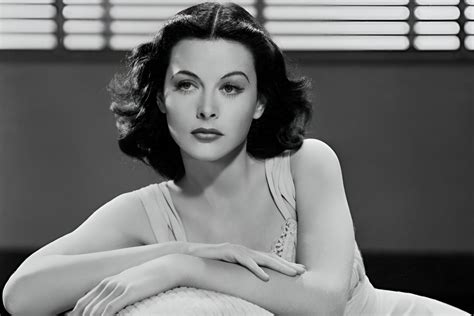
Hedy Lamarr was a woman who lived a double life—one in the dazzling lights of Hollywood’s Golden Age and another in the quiet corners of her home laboratory. Born Hedwig Kiesler in 1914 in Vienna, she fled an oppressive marriage to a Nazi-affiliated arms dealer to become one of MGM’s most bankable stars. While she was marketed as "The Most Beautiful Woman in the World," Lamarr possessed a mathematical mind that would eventually change the course of modern telecommunications.
From "Ecstasy" to Hollywood Royalty
Hedy first gained notoriety for the 1933 Czech film Ecstasy, but her real breakthrough came after meeting Louis B. Mayer in London. Under the MGM banner, she starred in classics like Algiers (1938) and Samson and Delilah (1949). Her exotic, sophisticated screen presence influenced everything from the design of Snow White to the look of Catwoman, yet she often found the roles of "glamour girl" intellectually stifling.
The Secret War Effort: Frequency Hopping
At the height of World War II, Lamarr wanted to contribute more to the Allied cause than just selling war bonds. Using knowledge she had overheard from her first husband’s business meetings, she identified a critical flaw in Allied weaponry: radio-controlled torpedoes were easily jammed by the enemy. If the signal could be made to "hop" between frequencies, it would be impossible to block.
Collaborating with avant-garde composer George Antheil, she developed a "Secret Communications System." Inspired by the mechanisms of player pianos, the duo used synchronized paper rolls to switch between 88 different frequencies. They were granted a patent in 1942. Though the U.S. Navy initially rejected the invention as too cumbersome, the technology was eventually implemented during the 1962 Cuban Missile Crisis.
A Modern Legacy: Wi-Fi and Bluetooth
Hedy’s "Frequency Hopping Spread Spectrum" (FHSS) invention didn't just help the military; it became the technological foundation for the digital age. Without her work, modern conveniences like Wi-Fi, Bluetooth, and GPS would not exist in their current form. It wasn't until the late 1990s that she finally received professional recognition for her scientific contributions, shortly before her passing in 2000.
Complete the Sentences (Technical & Bio Focus)
1. Hedy Lamarr was born in the city of in 1914.
2. To help the military, she co-invented a system for .
3. Her invention was inspired by the way functioned.
4. The collaborator who helped Hedy with her patent was the composer .
5. Today, her technology serves as the basis for modern .