Bob Geldof: Music, Activism, and Global Change
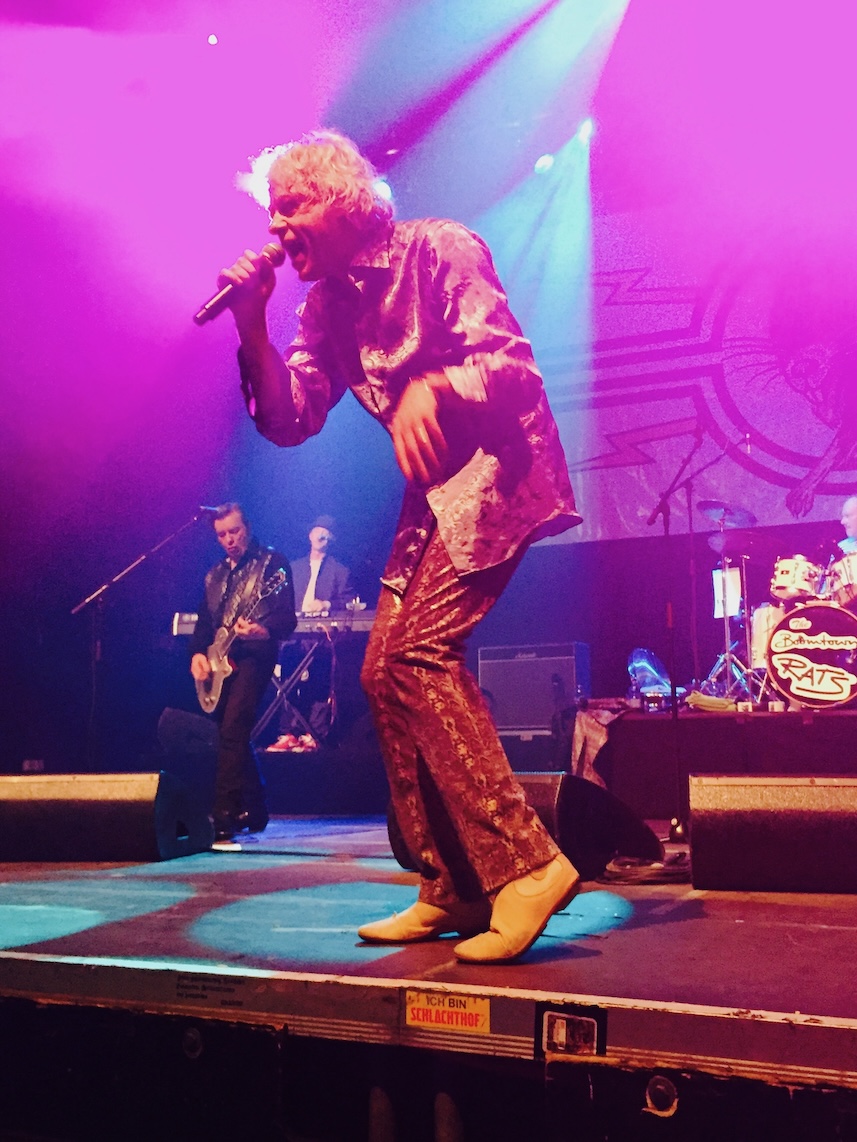
Robert Frederick Zenon Geldof (b. 1951) is a rare figure in modern history: a successful musician who leveraged his fame and relentless energy to become one of the world's most influential political and humanitarian activists. From his early career as a controversial New Wave frontman to his role organizing two of the largest global events in history, Geldof’s legacy is defined by his commitment to action.
The Irish Ratter: Fronting The Boomtown Rats
Before achieving international fame, Geldof had several less-glamorous jobs, including briefly working as a truck driver, a road maintenance worker, and a fish cutter. His career breakthrough came in the mid-1970s when he co-founded the Irish New Wave/punk band, The Boomtown Rats, where he served as the charismatic and often confrontational lead singer. The band was known for their sharp, socially observant lyrics.
"I Don't Like Mondays" and Controversy
In 1979, The Boomtown Rats released their most famous single, "I Don't Like Mondays." The song was a global hit, reaching number one in the UK. Tragically, the lyrics were directly inspired by a true event: a school shooting committed by 16-year-old Brenda Ann Spencer in San Diego, California. When asked why she did it, Spencer reportedly replied, "I don't like Mondays. This livens up the day." The song's success, however, was accompanied by controversy, as many critics and radio stations felt it exploited a tragedy.
A lesser-known fact about Geldof's early career is that he briefly worked as a music journalist in Vancouver, Canada before forming the band, which sharpened his critical eye and ability to frame compelling narratives, skills he would later use in global activism.
From Famine to Fury: The Birth of Band Aid
The turning point in Geldof's life came in October 1984. He was watching the BBC News when he saw a harrowing report by journalist Michael Buerk detailing the devastating famine in Ethiopia. Geldof later described the images as unbearable, feeling a moral imperative to use his platform to raise funds.
He co-wrote the song "Do They Know It's Christmas?" with Midge Ure (of Ultravox) and gathered dozens of high-profile British and Irish artists under the name Band Aid. The single was a massive success, but Geldof realized that more was needed to truly impact the crisis.
The Monumental Scale of Live Aid
On July 13, 1985, Geldof and Ure organized Live Aid, a dual-venue mega-concert held simultaneously in London's Wembley Stadium and Philadelphia's John F. Kennedy Stadium. Broadcast live across the world, it raised over $127 million for famine relief and became the largest satellite link-up and television broadcast of its time, reaching an estimated 1.9 billion viewers across 150 nations.
His passionate, often fiery appeals to the public—including a famous, swear-filled outburst on live television—were instrumental in driving donations and creating a sense of global urgency.
Beyond Aid: Live 8 and Political Activism
Geldof understood that charity alone could not fix systemic problems like global poverty and debt. Two decades later, he organized Live 8 in 2005. Unlike Live Aid, the goal of Live 8 was not primarily to raise money, but to pressure the leaders of the G8 nations who were meeting in Gleneagles, Scotland, to cancel the debt of the world's poorest nations and increase foreign aid.
A specific detail about his honors: In 1986, Geldof was awarded an honorary Knight Commander of the Most Excellent Order of the British Empire (KBE) by Queen Elizabeth II. Because he is an Irish citizen and not a Commonwealth citizen, he cannot formally use the title "Sir" when he is in the UK, although the title is commonly used worldwide.
Complete the Sentences (Geldof's Milestones)
1. Geldof's controversial hit song was inspired by a school shooting, called .
2. Before music fame, Geldof worked as a music in Vancouver, Canada.
3. The Boomtown Rats was a band from Ireland.
4. The devastating famine that catalyzed his activism was located in .
5. Geldof co-wrote the Band Aid song with .
6. The 1985 Live Aid concert was held in two main cities: London and .
7. Live Aid reached an estimated viewers worldwide.
8. The 2005 Live 8 concerts were primarily aimed at pressuring the leaders of the .
9. The main goal of Live 8 was to advocate for for the poorest nations.
10. Geldof received an honorary KBE but cannot use the title "Sir" because he is a citizen of .